AI can be useful for summarising, rewriting and asking questions about your notes. But your notes are private, so you should always know where your data is going.
Joplin does not send your notes to an AI service by default. AI features are disabled by default, and you have to explicitly enable them and choose an AI provider. Learn more about AI Chat.
You can connect Joplin to a local AI model, such as Ollama or LM Studio. In this case, your notes stay within your own device or private network and are not sent to an external service.
Joplin also blocks remote AI providers by default, as an additional safeguard.
Joplin lets you choose which tools are available to AI. This applies both to AI Chat and to the Model Context Protocol (MCP) integration.
For example, you can allow an AI assistant to search your notes without giving it permission to modify them. You can enable or disable individual tools depending on what you are comfortable with.
This means that connecting an AI service to Joplin does not automatically give it unrestricted access to your data or to all of Joplin's capabilities. Learn more about MCP.
You can connect Joplin to cloud AI services such as Joplin Cloud AI, OpenAI or Anthropic. When you do, the relevant data is sent to the provider you have selected.
For AI Chat, Joplin only sends the note content required for your request — such as the currently open note or selected text — rather than automatically sending your entire notebook. Learn more about the AI Chat panel.
Joplin 3.7 is the release where AI arrives in the app. A new chat panel lets you ask questions about the note you're working on, semantic search finds notes by meaning rather than by keyword, and a built-in MCP server allows external tools to work with your notes.
Alongside this, the desktop app gains whiteboards - a new way to lay out notes and ideas visually - while mobile continues its interface redesign. Both platforms benefit from a more capable Markdown table editor and a number of sync reliability improvements.
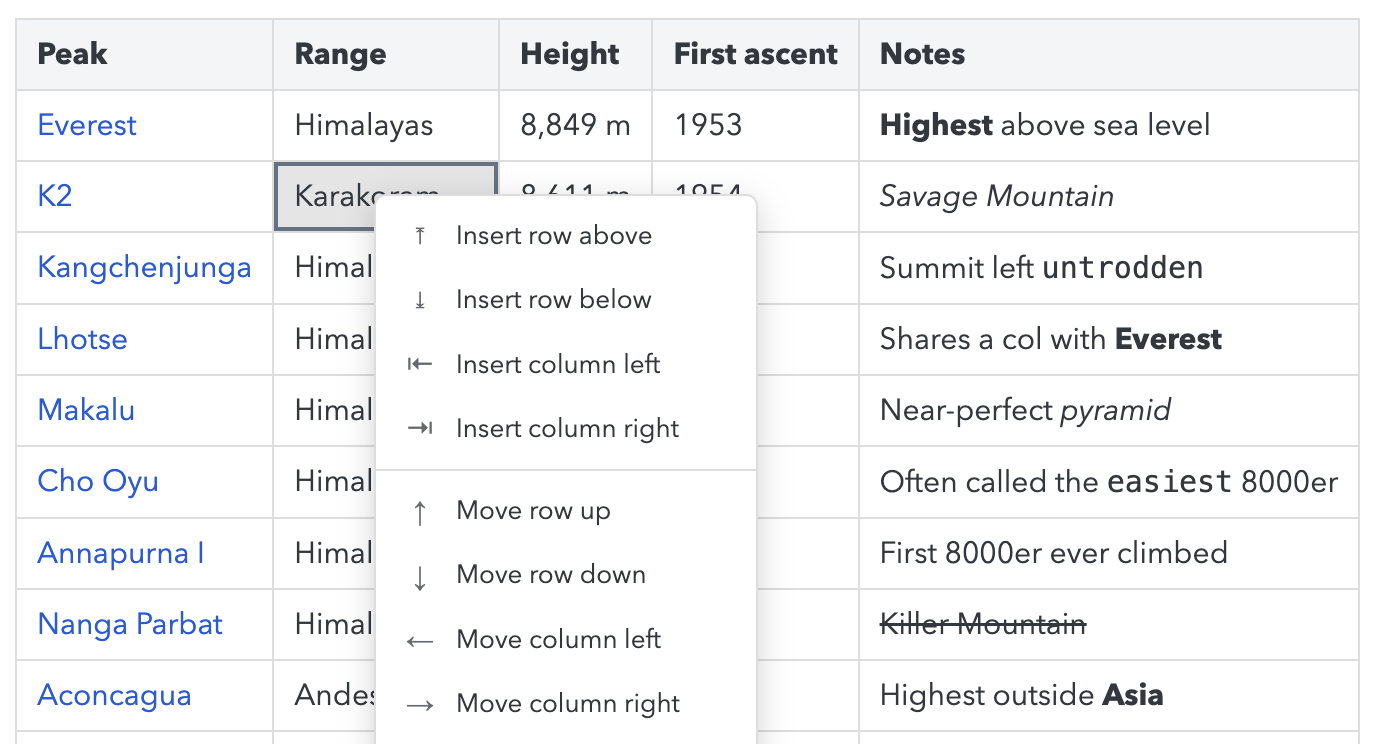
Editing Markdown tables has always been the least pleasant part of writing in plain text. Joplin 3.7 adds an interactive table editor to the Markdown editor, with a context menu to add and delete rows and columns.
Because the editor is shared between platforms, this is available on mobile as well.
Syncing is faster and safer this cycle. Deleting a lot of notes at once on Joplin Server and Joplin Cloud no longer takes as long, and if you happen to be typing in a note just as it's being updated from another device, your changes are no longer at risk of being overwritten.
Joplin no longer processes plugin files that don't need processing at startup, which noticeably reduces launch time for users with several plugins installed.
The headline addition of this release is a set of AI features built into the app.
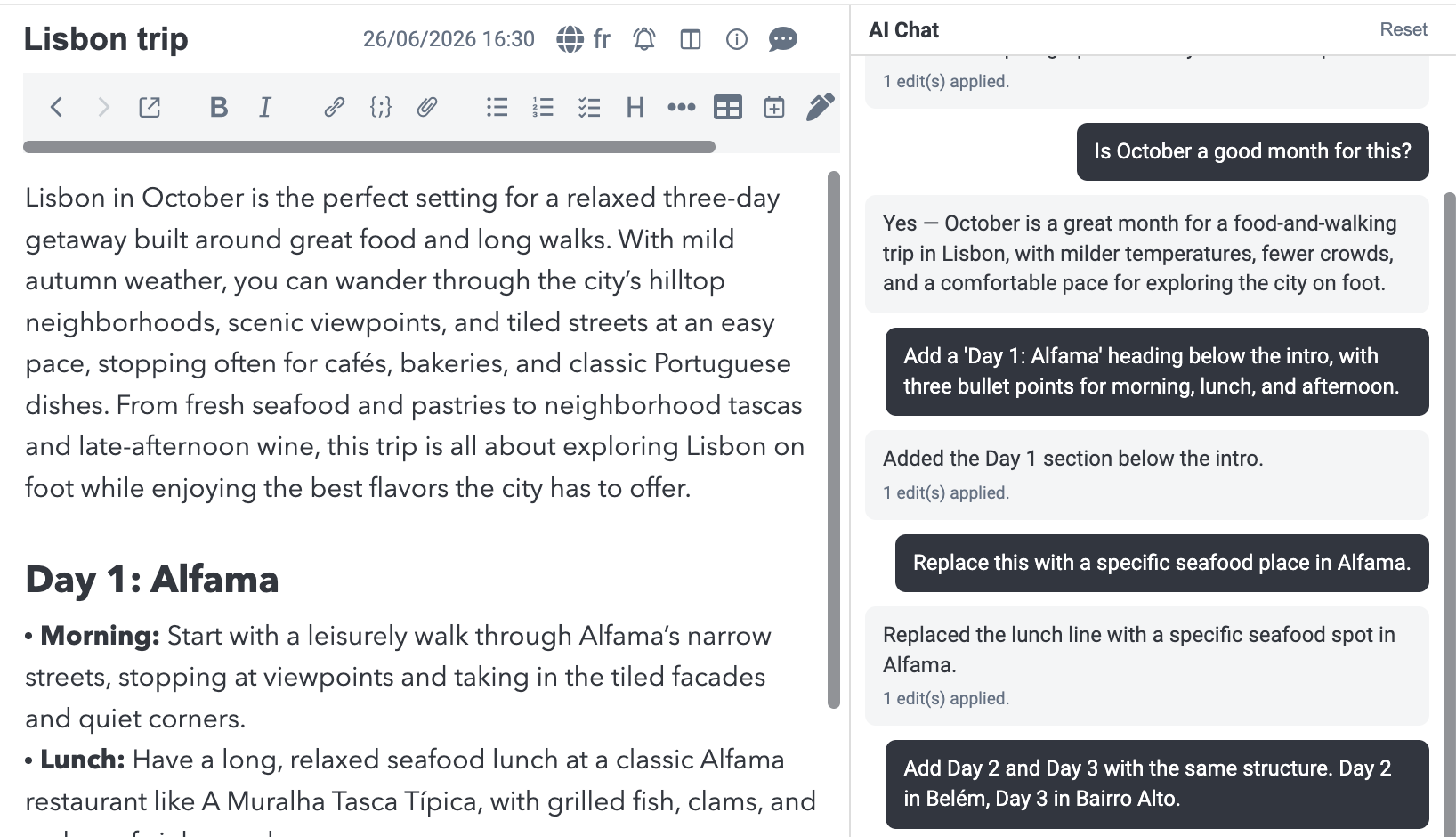
The chat panel sits alongside the current note and can answer questions about it, summarise it, or make edits to it on your behalf, as well as read images in your notes.
To use the AI features you need a provider, and this release introduces Joplin Cloud AI to make that as simple as possible. If you already sync with Joplin Cloud, you can simply turn it on and start using the chat panel right away - there's no API key to obtain, and nothing to configure.
If you would rather use your own provider, that remains possible: the chat panel also works with your own OpenAI or Anthropic key. It can equally be pointed at a local model running on your own machine, in which case your notes never leave your computer at all.
Semantic search is now available in the sidebar and in Go To Anything. Unlike the regular search, it matches on meaning rather than exact words, so a search for "holiday plans" can surface a note titled "Trip to Portugal".
This is powered by a new note embeddings indexer, which runs in the background and indexes both note titles and content.
Finally, all of this is available to plugin authors too. Plugins can now hold conversations with a model, run semantic searches, and work with the note index directly - which opens the door to a whole new class of plugins, from automatic tagging and summarising to tools that surface related notes as you write.
All the AI features are marked as Beta: they work, but they are new, and we expect to refine them based on how people actually use them.
Joplin now includes an MCP server, which means external AI tools and assistants can read from and write to your notes through a standard protocol. If you already use an MCP-capable app such as Claude, it can now work directly with your Joplin data.
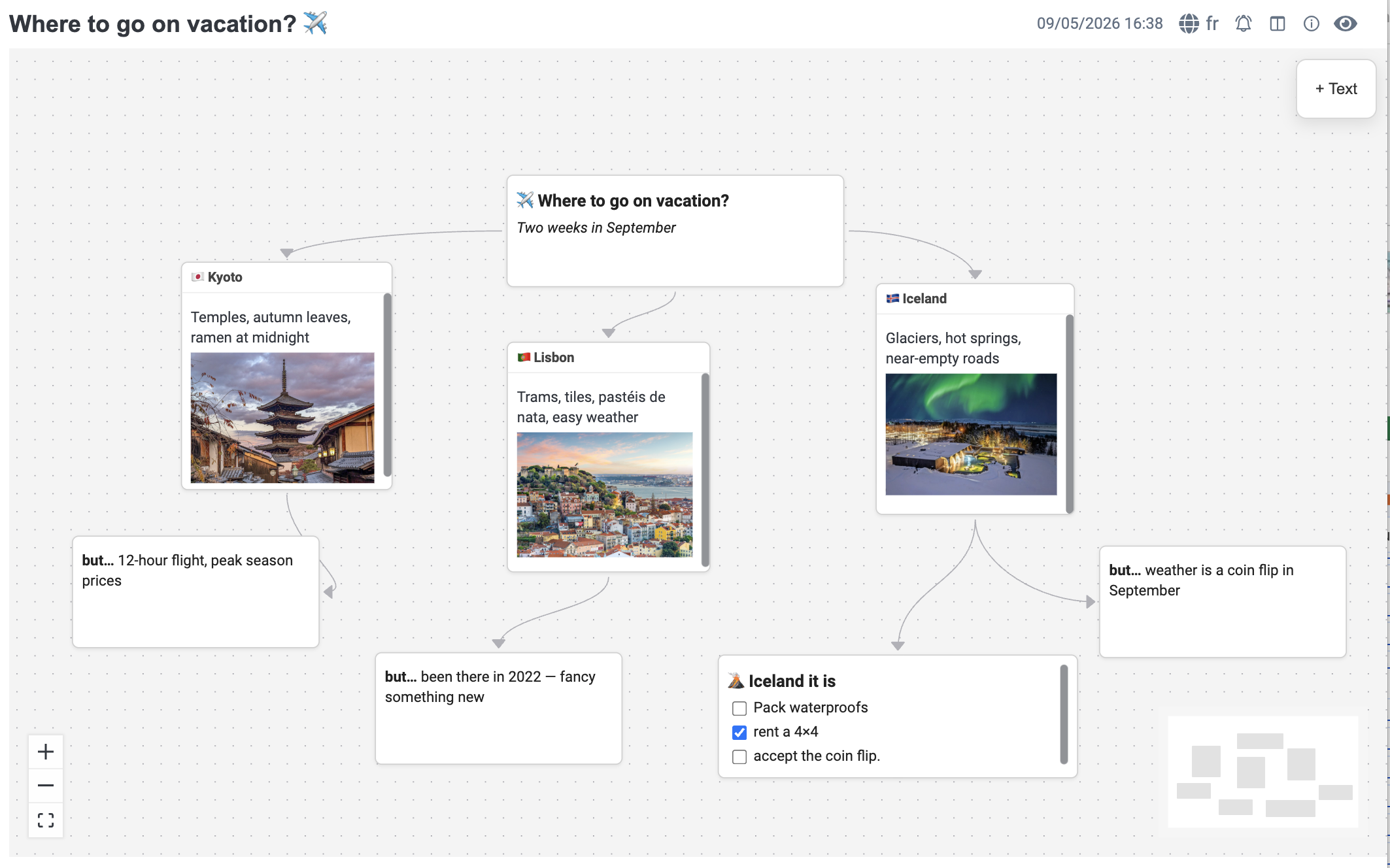
A brand new feature on desktop: whiteboards let you arrange notes, files and free-form cards on an infinite canvas, and connect them with labelled arrows.
Notebooks and tags are good at filing things away, but they say little about how your notes relate to one another. A whiteboard gives you that missing view: you can map out a project, plan a piece of writing, or lay out the pieces of a problem and see the connections between them at a glance.
Cards and groups can be coloured, and files can be dragged and dropped straight onto the canvas.
Joplin 3.7 adds support for importing an Obsidian vault, on both desktop and the CLI, making it straightforward to move over from Obsidian while keeping your notes and their structure.
The Evernote importer now resolves cross-notebook links in many cases where they were previously lost.
The OneNote importer also received another round of fixes, in particular around note order, printouts and handwriting.
Joplin Cloud users could already publish a note to the internet as a public page. It is now possible to publish a whole notebook at once.
The notes are published together, with their links between each other preserved, which effectively turns a notebook into a small website: a piece of documentation, a recipe collection, a set of course notes, or anything else you want to share as a whole rather than one page at a time. Anyone with the link can read it, and it stays up to date as you edit the notes in Joplin.
And when sharing a notebook, email addresses are now auto-completed, which makes sharing with the same people repeatedly much quicker.
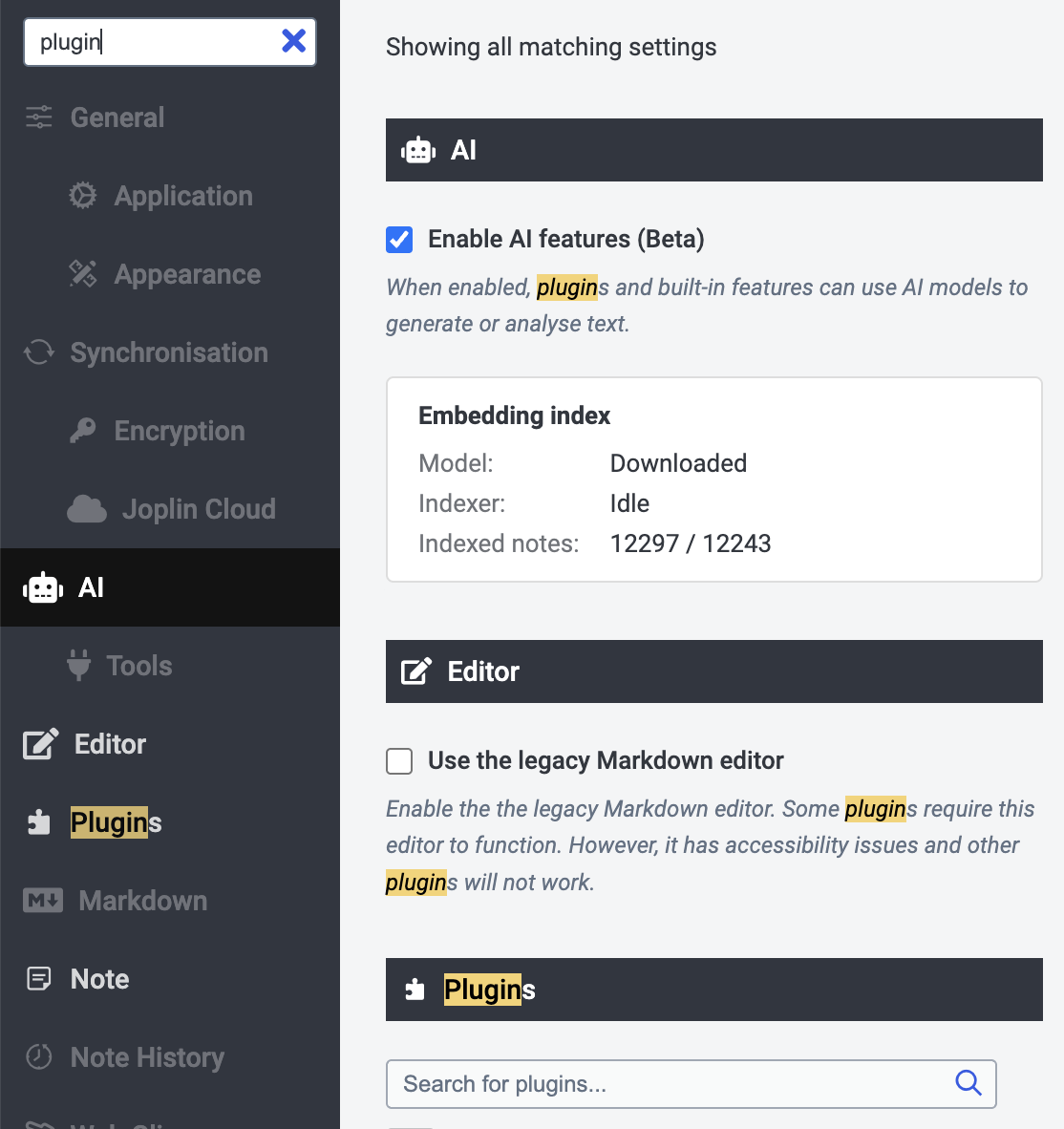
Joplin has accumulated a lot of settings over the years, and it is not always obvious which section holds the one you need. The configuration screen now has a search box: type what you are after, and the matching settings appear, wherever they happen to live.
Joplin desktop now supports post-quantum cryptography (PQC) for TLS connections. This protects your synchronisation traffic against "harvest now, decrypt later" attacks, where encrypted data captured today could be decrypted by a quantum computer in the future.
The Linux AppImage no longer depends on the deprecated libfuse2 library. On many distributions, installing Joplin used to mean first tracking down and installing that dependency by hand - it should now simply run out of the box.
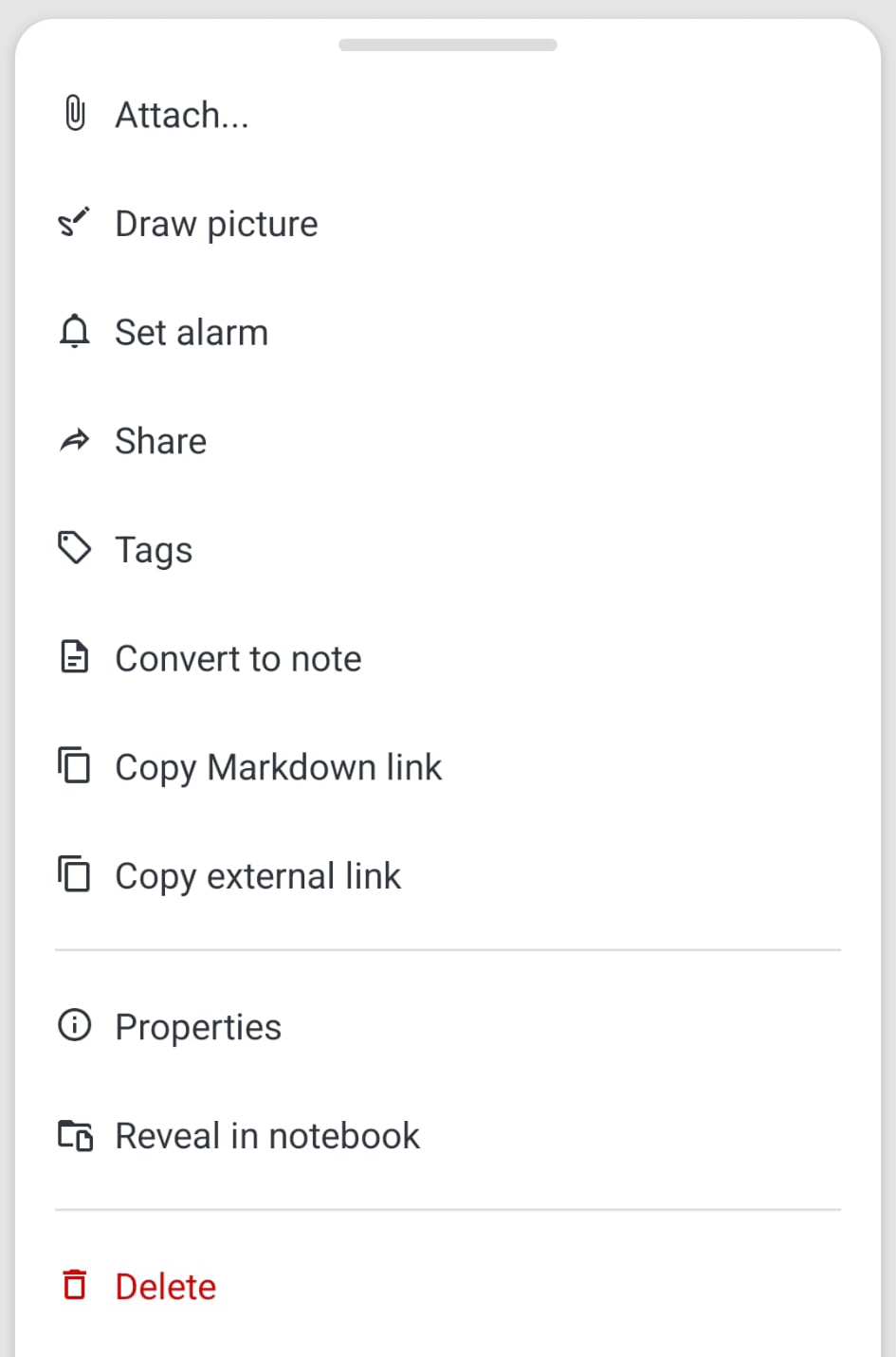
The mobile redesign that started in previous releases carries on through 3.7, this time focusing on the menus you reach for constantly - creating a note, acting on one, or long-pressing a notebook. They are now easier to read at a glance, and their options are laid out more sensibly, so common actions take less hunting. The search screen has had the same treatment.
Dialogs have been tidied up too, with buttons always appearing in the same order throughout the app - a small thing, but it means you stop having to check which side "Cancel" is on before tapping.
The native crypto module has been refactored, which makes encryption and decryption substantially faster on mobile. This is most noticeable when first setting up end-to-end encryption or syncing a large collection for the first time.
You can now choose how the notebook list itself is ordered, from the configuration screen: alphabetically, or by which notebook was most recently updated - and in either direction. Sorting by recent activity is particularly handy on mobile, as it keeps the notebooks you are actually working in at the top of the sidebar.
Beyond the new features, a lot of this release went into making the apps more reliable and more secure: Joplin 3.7 includes over 100 bug fixes and eight security fixes across desktop and mobile.
Joplin 3.6 brings a more polished editing experience, a much improved OneNote importer, and a clearer view of what's happening when the app syncs. Mobile also gains a number of features that previously were only available on desktop.
The Markdown editor now renders formatting directly in the editor by default, which means headings, bold and italic text, links, images and other elements now appear styled as you type, instead of as raw Markdown. This brings the editing experience much closer to the final rendered note, while keeping all the speed and predictability of plain Markdown.
In addition, inline HTML such as colored text, superscript, subscript and strikethrough is now rendered live, and YAML frontmatter blocks are displayed as a clean styled block rather than raw text. Code block highlighting in the editor has also been brought closer to what you see in the viewer.
Markdown formatting commands such as bold or italic now also apply correctly across multi-line selections, formatting each line individually rather than wrapping the whole block at once.
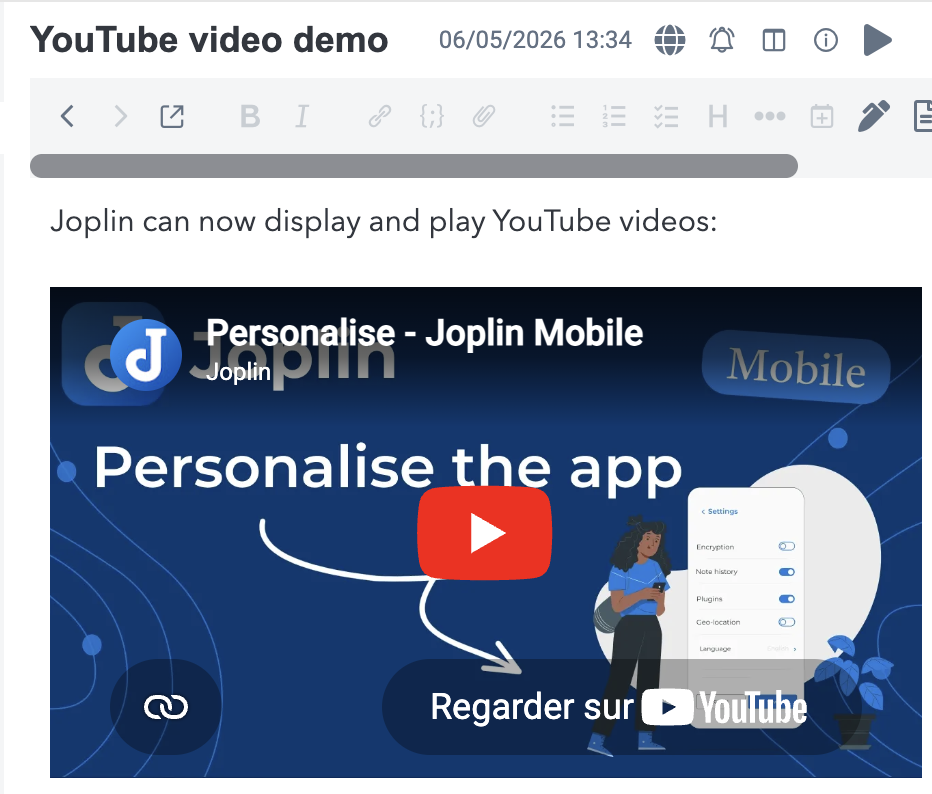
It is now possible to embed external content directly in notes, with YouTube videos being the most visible example - paste a link and the video plays inline.
Audio, video and PDF attachments can now also be linked to a specific section using start and end times, making it easy to point readers to a particular passage instead of the full file.
The OneNote importer received a large amount of work this cycle. Importing .onepkg files now works on Linux and macOS, not just Windows, and large .one files with many attachments are now handled correctly. Handwriting and ink import has been substantially improved, with better positioning, scaling and support for nested ink containers.
Many smaller fidelity issues have also been fixed: bold and italic now convert properly to Markdown, fonts are handled more sensibly when Calibri is unavailable, PDF printouts are imported correctly, cross-page links are preserved, and notebooks with non-ASCII characters in their titles no longer fail to import. Overall, migrating from OneNote to Joplin should now be noticeably smoother and more faithful to the original content.
Several long-standing causes of unexpected conflicts have been addressed, including conflicts that could appear during sync, after a full sync, or due to resource duplication. Resource processing in read-only shared notebooks has also been made more reliable.
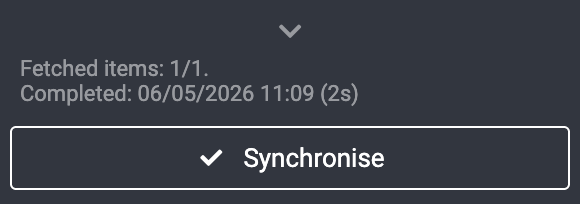
The sidebar now includes a sync status icon and a collapsible sync report, giving you a clear view of what Joplin is doing without having to open the log. A new toggle button also lets you hide or show the sync panel at any time. Together these changes make sync activity much more transparent in day-to-day use.
Exported PDFs now include accessibility information, and OCR'd PDFs gain a text layer that makes them searchable and screen-reader friendly. OCR also now supports Chinese and Norwegian.
It is now possible to set a separate sort order for each notebook on mobile, matching the behaviour that has long been available on desktop. This is particularly useful when different notebooks need different sorting (e.g. a journal sorted by date, a reference notebook sorted alphabetically).
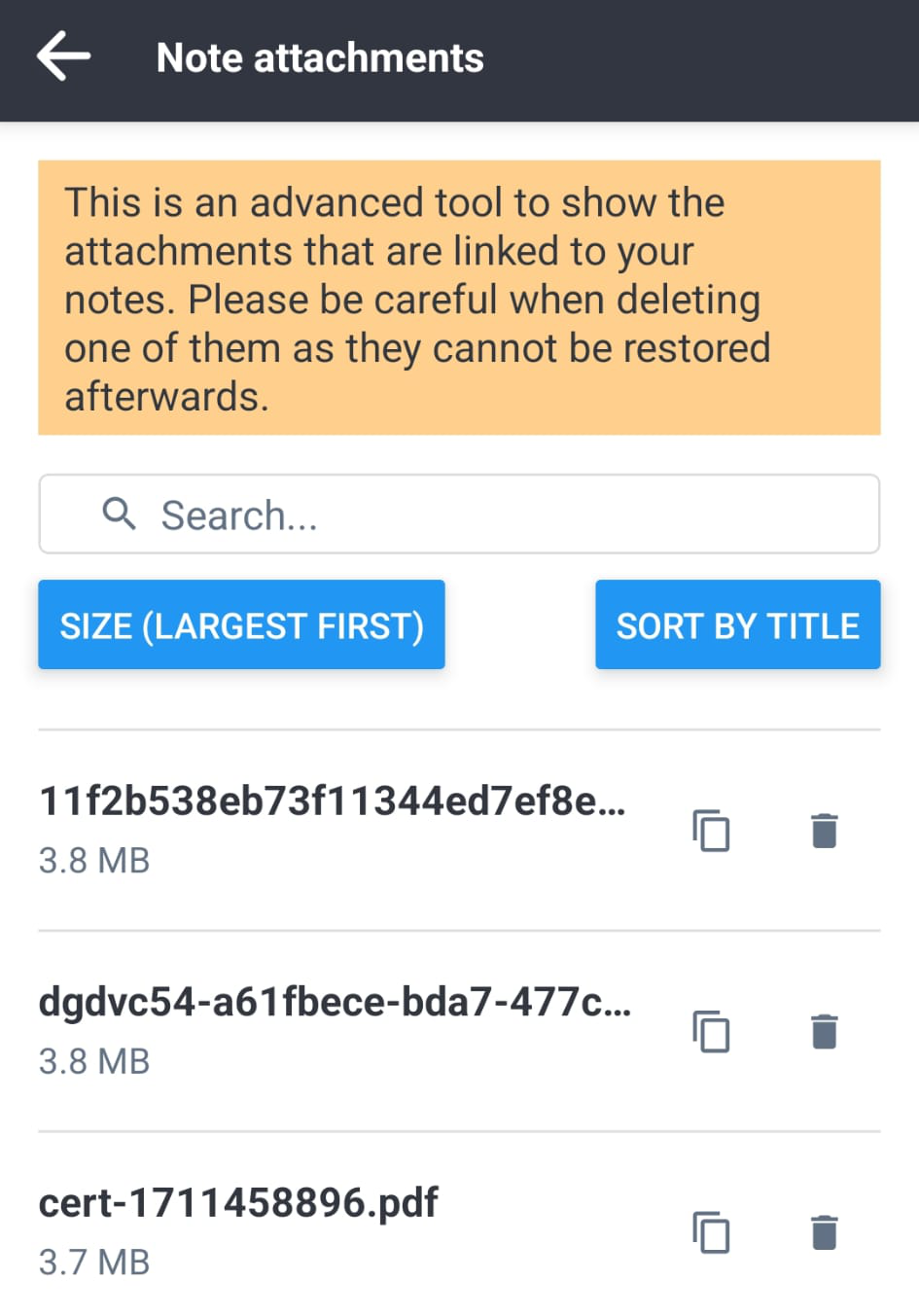
A new screen lists all attachments across your notes, making it much easier to review what's stored, find a specific file, or delete attachments you no longer need. It's available from Configuration → Tools → Note attachments.
Joplin 3.6 also includes a large number of bug fixes across desktop and mobile, addressing issues in editing, syncing, importing, rendering and general stability. Several security-related improvements have also been made, including a stronger Content Security Policy on desktop.
We have introduced a publicly signed warrant canary for Joplin.
A warrant canary is a regularly updated statement confirming that, as of the stated date, the project has not received secret legal orders, gag orders, or demands requiring the introduction of backdoors into the software or its infrastructure.
The canary is:
Cryptographically signed using a dedicated OpenPGP key
Updated every 60 days
Published in plain text for independent verification
If the canary is not updated within its stated validity window, it should be considered expired.
This measure is intended to improve transparency and provide an additional signal to the community. It does not prevent legal orders, but it helps ensure that any material change in our legal status cannot occur silently.
We’re happy to announce a collaboration with HMD Secure, who will preload Joplin on their upcoming device, the HMD Terra M.
This partnership brings Joplin to a new class of rugged, professional devices built for instant reliable communication, and reflects a shared focus on reliability, security, and long-term use.
HMD Secure Oy is a subsidiary of HMD (Human Mobile Devices), the largest European smartphone manufacturer. Headquartered in Finland, HMD Secure develops rugged, sovereign, and secure solutions for governments, defence, public safety, enterprise, and critical infrastructure.
Built on a foundation of European R&D and enhanced supply chain traceability and security, HMD Secure offers organisations a trusted platform for sovereignty, resilience, and long-term control.
The HMD Terra M is a compact, ultra-rugged smart feature phone delivered as a fully managed, mission-critical communications solution. Designed for professionals operating in demanding environments, it combines MIL-STD-810H and IP68/IP69K durability with instant Push-to-Talk, programmable PTT and emergency keys, loud high-output audio, and long battery life.
Built for rapid enterprise deployment, Terra M supports modern connectivity including dual SIM and eSIM, enterprise-grade MDM, and secure applications—enabling organisations to deploy, manage, and scale frontline communications reliably from day one.
Joplin’s offline-first design, end-to-end encryption, and focus on data ownership make it a natural fit for a device built to be trusted in the field. With Joplin preloaded, Terra M users can securely capture notes, procedures, and checklists from day one, even in challenging conditions.
The Markdown editor has been refined to feel more stable and closer to the final rendered view. Headings in the editor now more closely match how they appear when viewing a note, reducing the visual jump between editing and reading. Layout issues have also been addressed so elements like rendered checkboxes and images no longer cause the editor to shift unexpectedly while typing.
The ABC music notation plugin appeared to be popular but had some limitations. With this new version, ABC is now part of the app, which means it can now work from published notes, and from the Rich Text editor!
Switching between notes is now less disruptive. Joplin restores cursor position and scroll location more reliably, making it easier to move back and forth between notes—especially when working with longer documents or comparing content—without losing your place.
Tags are now treated in a case-insensitive way, which helps prevent duplicate tags caused by differences in capitalisation, while still allowing mixed-case tag names. All this time we were hoping that @dpoulton would just get used to lowercase tags, but 5 years later it looks like it's not happening ;) So thank you @mrjo118 for implementing it!
Syncing and sharing have been made more robust in everyday use. Joplin now handles repeated syncs more efficiently, avoids unnecessary data usage, and is better at detecting and syncing all changes, particularly when using WebDAV and S3 sync targets.
Moreover filesystem synchronisation is now more reliable, in particular when used alongside tools like SyncThing on both mobile and desktop.
Accessibility has seen further refinements in this release. Dark mode readability has been improved, common editor elements are clearer, and animations are reduced or disabled when system “reduce motion” settings are enabled, making the app more comfortable to use for a wider range of users. Keyboard navigation has also been improved on the desktop application.
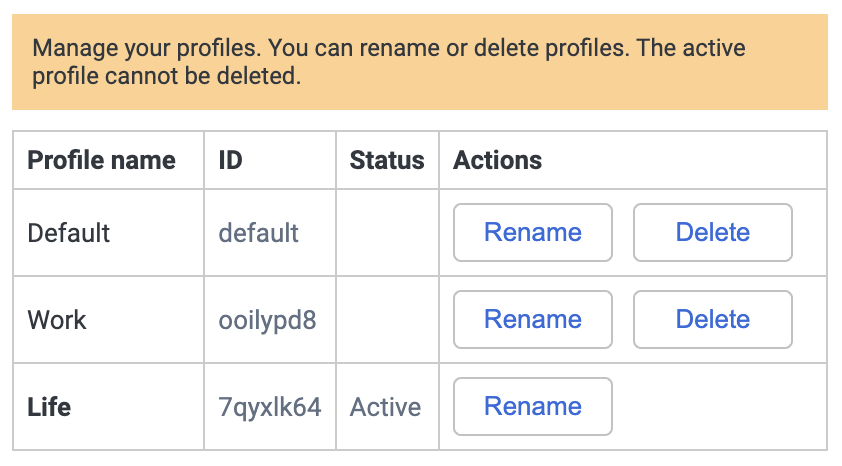
Managing multiple profiles on desktop is now simpler thanks to a new, more user-friendly profile management interface. This removes the need to manually edit configuration files and makes switching between different setups easier and safer.
Importing content from OneNote is now more reliable and accurate. Support has been expanded to cover more OneNote file formats, and many edge cases have been addressed so imported notes more closely match their original structure and content. This makes migrating from OneNote to Joplin smoother and more trustworthy.
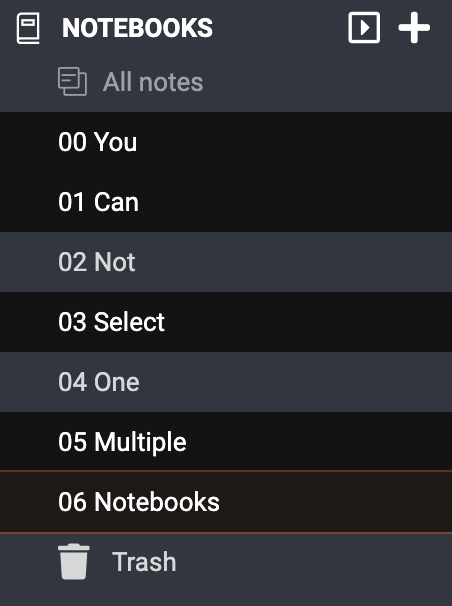
Better tools for organising large note collections
Desktop users can now select multiple notebooks at once, making it easier to reorganise notebook structures, move groups of notes, or clean up larger collections without working notebook by notebook.
Both the Markdown and Rich Text editors have been further refined. Cursor behaviour is more predictable, visual consistency between editing and viewing has improved, and several layout and rendering issues have been fixed to reduce interruptions while writing.
Search and navigation on desktop have been improved with fixes that ensure search results behave consistently and remain visible when moving between windows or views.
The WebClipper is not forgotten in this release - clipping certain math formulas, in particular from Wikipedia but also other websites, has been improved. Additionally, certain scientific articles are now also better handled by the WebClipper.
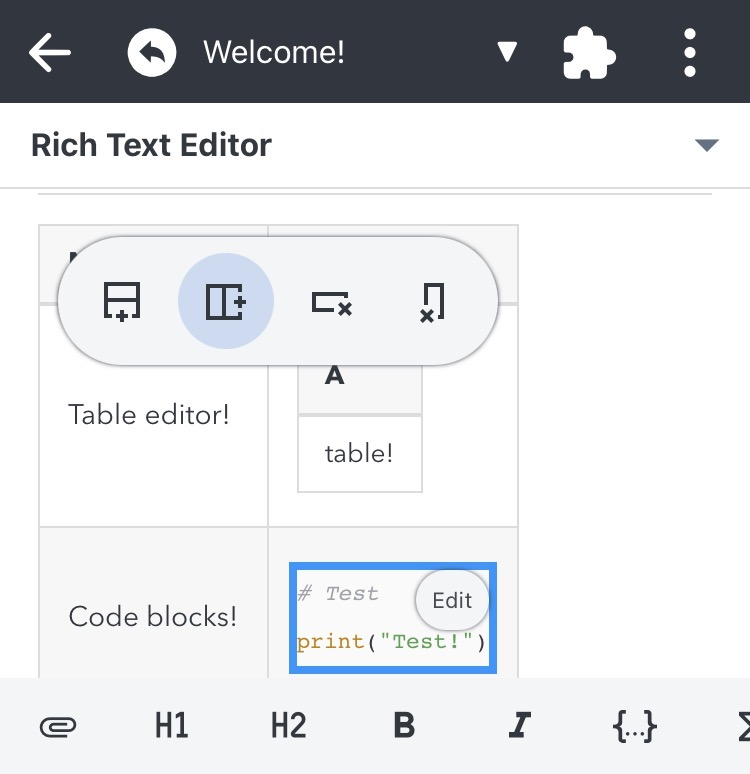
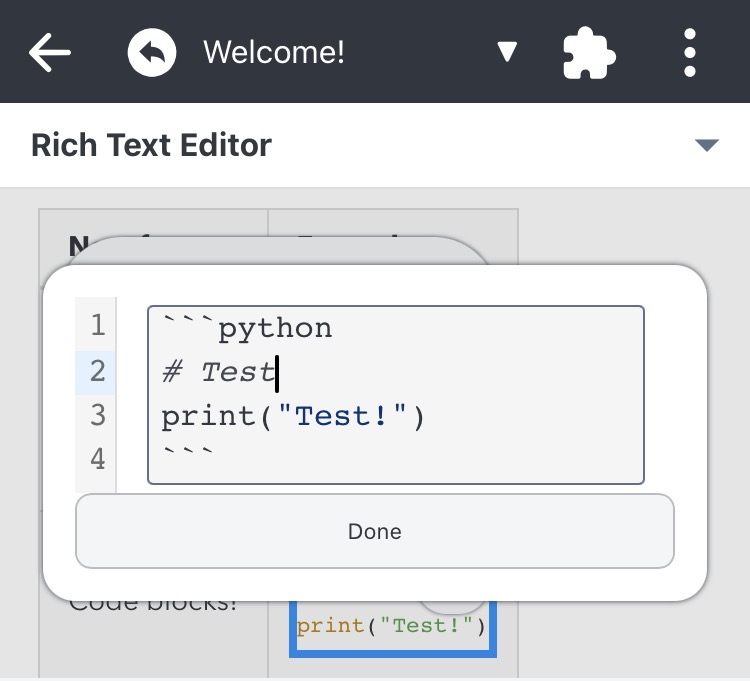
The mobile Rich Text Editor continues to improve, with new and expanded support for tables, code blocks, and other structured content. These changes make it easier to create and edit more complex notes directly on mobile devices.
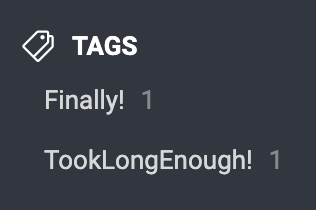
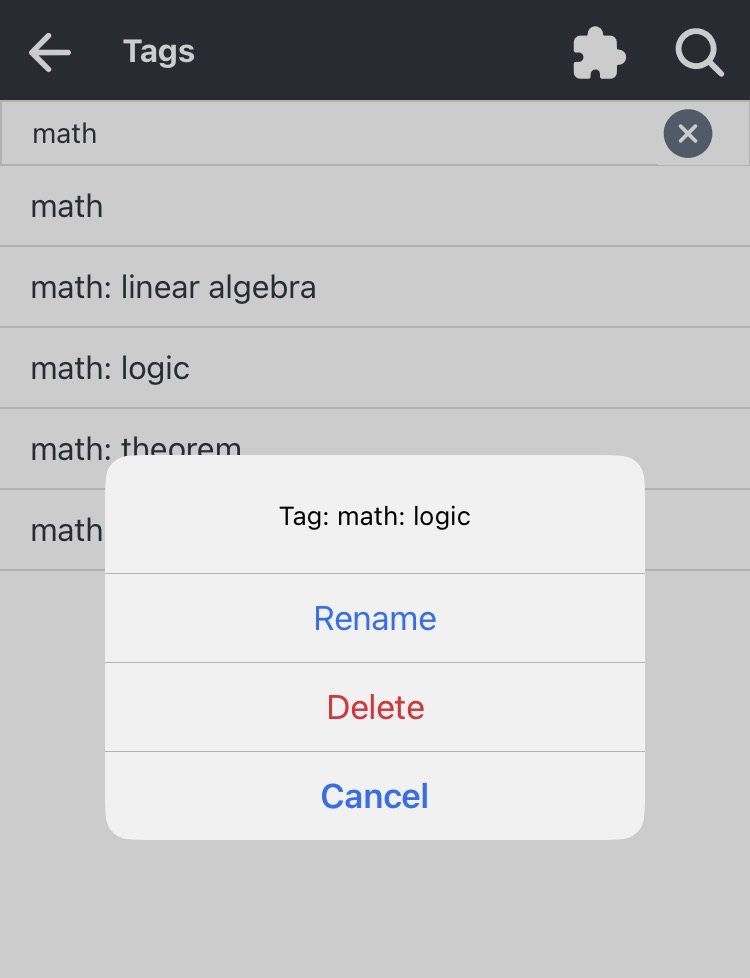
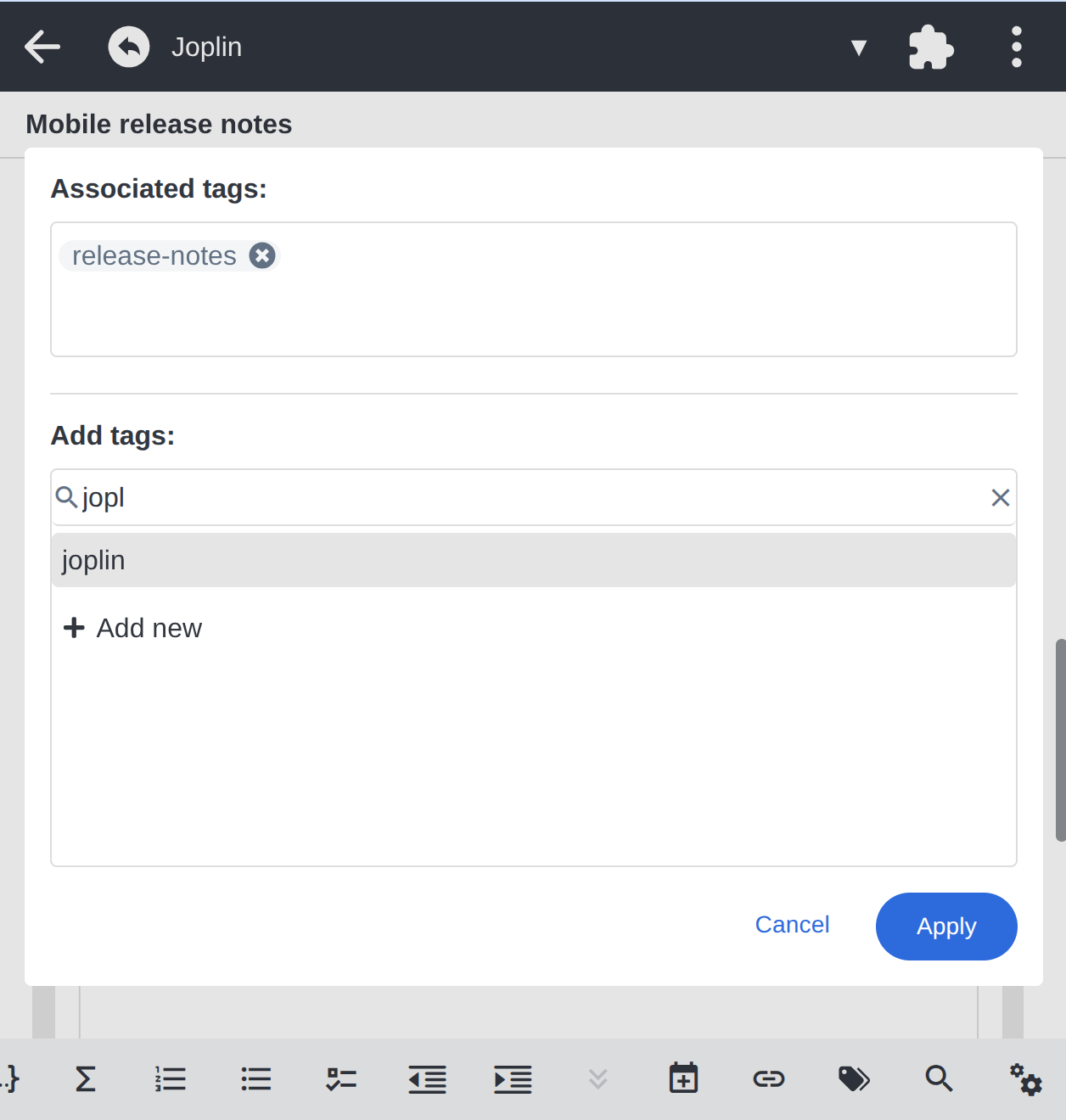
Managing tags on mobile is now more practical. You can rename and delete tags directly from the app, and searching through tags is easier, helping keep large tag lists organised over time.
Improved stability and usability on mobile devices
Several fixes improve overall stability and usability on mobile, particularly on smaller screens. Issues causing UI elements to appear off-screen have been addressed, and the app behaves more consistently in situations that previously caused hangs or visual glitches.
A large number of stability, correctness and security fixes
Joplin 3.5 includes about 114 bug fixes across desktop and mobile, addressing issues in editing, syncing, importing, rendering, and general stability. Many fixes target edge cases that could lead to crashes, inconsistent behaviour, or rare data loss scenarios. Moreover, this version includes several vulnerability fixes to make the applications more secure.
The mobile app now includes a beta Rich Text Editor! The new editor renders formatting/math/images within the editor:
To try it, 1) open a note in the default Markdown editor 2) open the note actions menu (the three vertical dots) for the note and 3) click “Edit as Rich Text”.
Be aware that this editor is still in active development and has a number of known limitations and issues. The Rich Text editor is based on ProseMirror and will behave differently from the desktop Rich Text Editor in many cases.
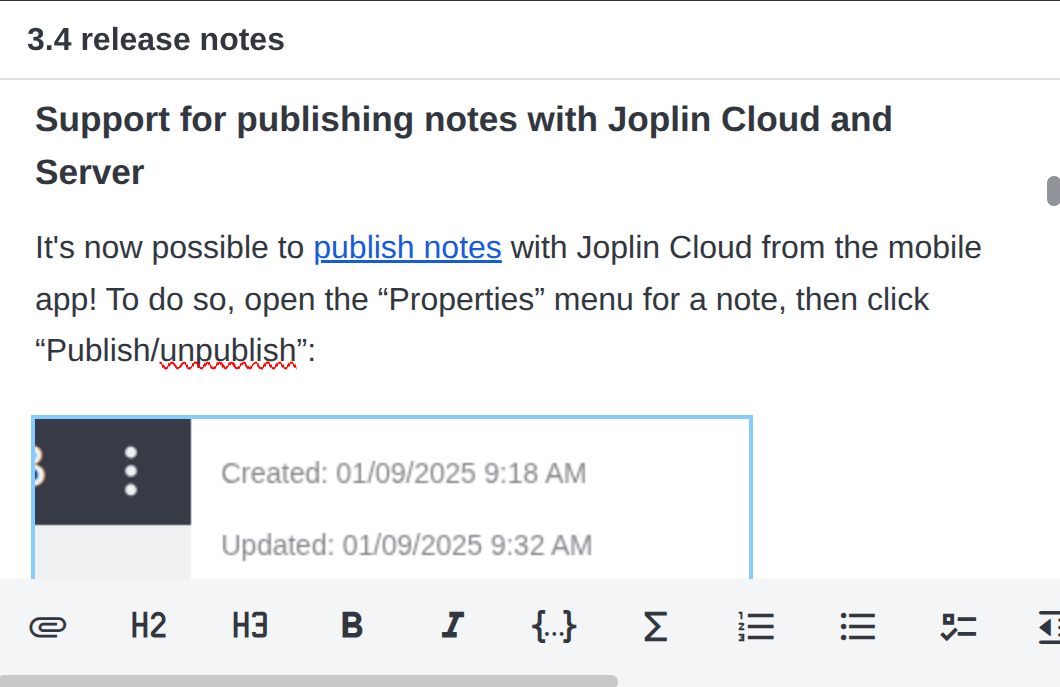
Support for publishing notes with Joplin Cloud and Server
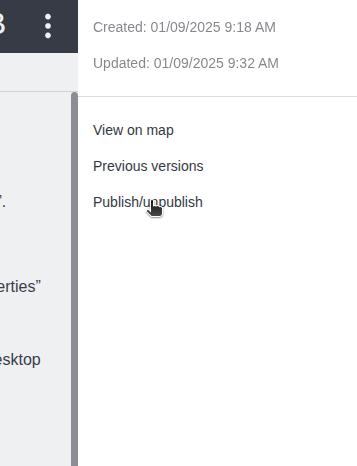
It's now possible to publish notes from the mobile app! To do so, open the “Properties” menu for a note, then click “Publish/unpublish”:
Next, in the “publish note” dialog, click “Copy shareable link”. Notes can later be unpublished by clicking "Unpublish" in the publication dialog.
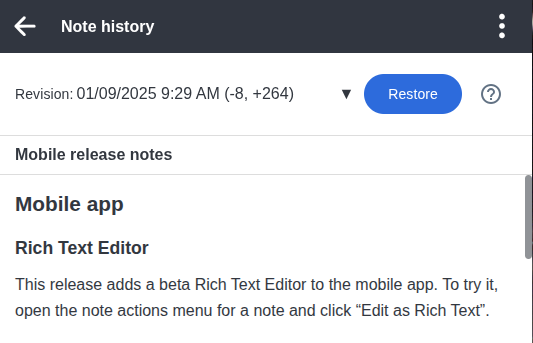
It is now possible to view and restore previous note versions from the mobile app. Like the "publish note" feature, previous note versions can be accessed from the note properties menu.
As on desktop, the note history feature can be configured from the “Note History” tab in settings.
We've made the desktop application roughly 33% smaller! In addition to faster application startup, this means that the desktop app should be faster to download take up less space.
New commands have been added to the terminal app, including publish, unpublish, and share. This allows the terminal app to manage shared folders and published notes.
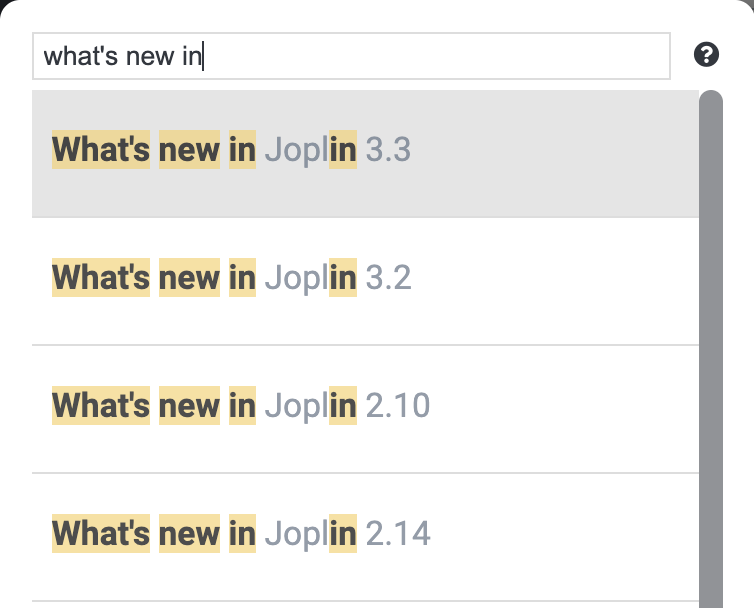
The Joplin 3.3 release introduces significant accessibility enhancements designed to make the application more inclusive and user-friendly. Users can now benefit from improved keyboard navigation, thanks to newly added shortcuts and clearer labels that streamline interaction across the interface. We've also added a "go to viewer" menu item that moves focus from the note editor to the note viewer. Focus is moved to the location in the viewer corresponding to the location of the cursor in the editor.
Screen reader support has been bolstered, ensuring elements like the note list and sidebar are easier to toggle and interact with. These updates make the application more usable for individuals relying on assistive technologies.
Additionally, visual improvements, including increased contrast for UI components such as URLs, sidebars, and scrollbars, enhance readability for users with visual impairments. This focus on clarity ensures a more comfortable user experience.
The Rich Text Editor has also received accessibility-focused updates, allowing for more seamless interaction with code blocks using either a keyboard or touchscreen. These refinements highlight Joplin's dedication to creating an accessible and equitable experience for all users.
Joplin 3.3 introduces a convenient "Collapse/Expand All" button for notebooks, allowing you to quickly adjust the visibility of your notebook hierarchy. This feature simplifies navigation by letting you expand all notebooks to locate specific notes or collapse them for a tidier interface!
A new dialog has been added to make linking to notes easier. By pressing Shift+Option+L on macOS or Shift+Alt+L on Windows and Linux, you can quickly bring up a search box. Simply type the name of the note you want to link to, and the link will be added to your current note!
Joplin Desktop now lets you run multiple instances at once! This means you can easily separate your work and personal notes, or use Joplin across different virtual desktops. Each instance runs independently with its own settings, plugins, and notes, so nothing overlaps. You can open a second instance through in menu File => Open secondary app instance..., and customise it however you like!
This version includes multiple improvements and bug fixes to the Rich Text Editor. In particular it has now been upgraded to TinyMCE v6, and it adds support for Markdown auto-replacement. For example, typing ==highlight== creates highlighted text. Auto-replacement can be disabled in settings.
Like the desktop app, the mobile app includes several accessibility improvements designed to enhance the user experience for those relying on assistive technologies. Focus handling has been improved in the note actions menu and modal dialogs, ensuring smoother navigation for screen reader users. Additionally, the default modal close button is now accessible, and issues with invisible buttons being focusable have been resolved.
Other updates include better contrast for faded URLs in the Markdown editor, making them more readable for users with visual impairments. The encryption configuration screen has been improved for better accessibility, and screen reader support has been added for creating and editing profiles. These changes collectively improve navigation, readability, and usability for all users.
You can now easily capture and include audio recordings directly within your notes. To use this feature, open the kebab menu and select "Record audio." You can then to record your audio input. When finished, the app automatically attaches the recorded audio file to the note. This functionality is perfect for capturing ideas, reminders, or supplementary audio information in a quick and intuitive way.
The voice typing feature in Android has undergone a significant improvement, making it more accurate. Previously introduced in version 2.11, the feature allowed you to transcribe speech into text but lacked punctuation and struggled with accuracy in certain scenarios. The revamped version now leverages Whisper, an advanced AI model, to deliver improved recognition, including automatic punctuation and paragraph formatting.
Despite its advancements, the feature is currently in beta due to the demanding nature of the required AI models. While it defaults to a smaller, less accurate model to accommodate older devices, you can manually download and switch to more accurate models for better performance.
As previously, the feature remains entirely offline, ensuring that private recordings are never sent to third-party servers, a distinct privacy advantage over similar solutions from Google or Apple. Additionally it means you can use the feature even when you don't have an internet connection. We plan to refine this feature further, eventually defaulting to the more accurate model as stability improves.
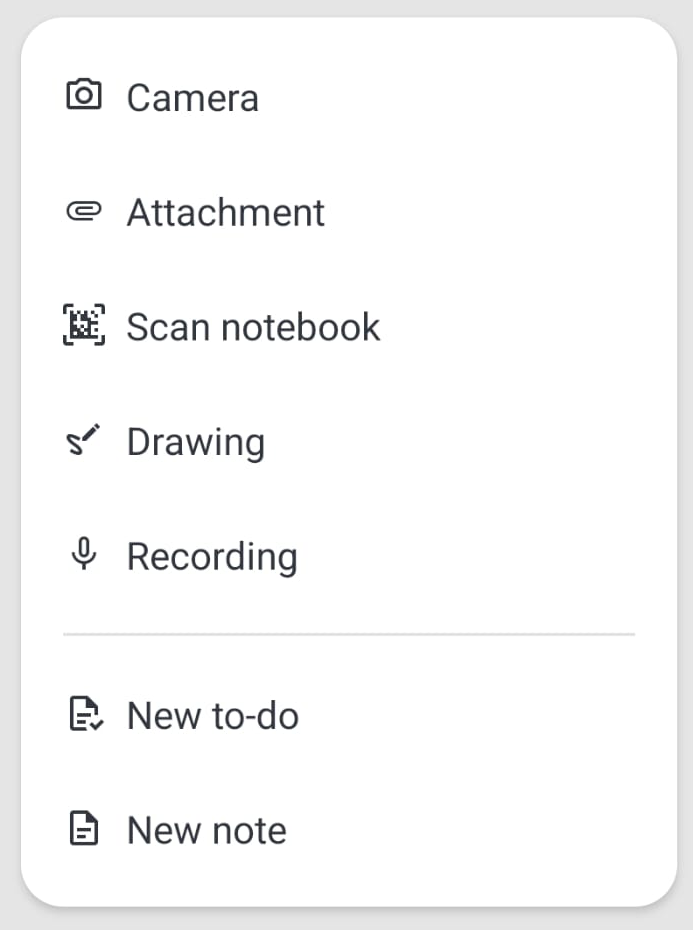
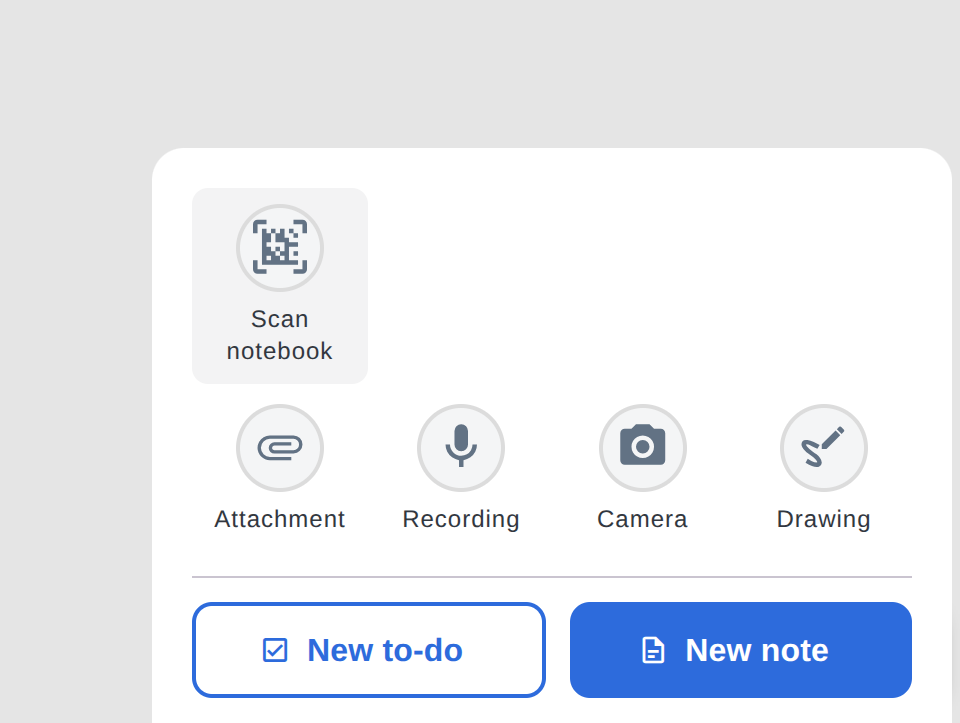
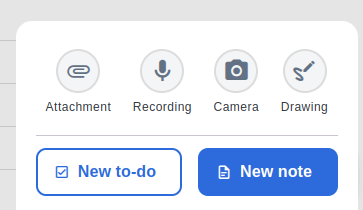
The redesigned "New Note" menu takes note creation to a whole new level of flexibility and convenience. Previously, this menu only offered options to create a new note or a new to-do. With the latest update, you now have quick access to a variety of shortcuts, enabling you to attach files, record audio, capture photo notes, or even create drawings directly from the menu. This intuitive redesign makes it easier to choose the format that best suits your needs.
As always, we continue to reinforce the security of Joplin. This version implements a robust content security policy for the Rich Text Editor, safeguarding the application against malicious content.
In total, this version delivers 39 bug fixes on desktop and 17 on mobile, enhancing both the security and stability of the application.
Joplin now supports importing OneNote archives, a significant step for users transitioning from OneNote. Microsoft has long made it challenging to leave OneNote, offering limited export options and complex formats that make it difficult for app developers to support it. Despite these hurdles, @pedr tackled these issues head-on, developing an import tool that simplifies the process. This addition makes Joplin a practical choice for those looking to move away from OneNote's ecosystem.
To use this feature, select File => Import => ZIP - OneNote Notebook
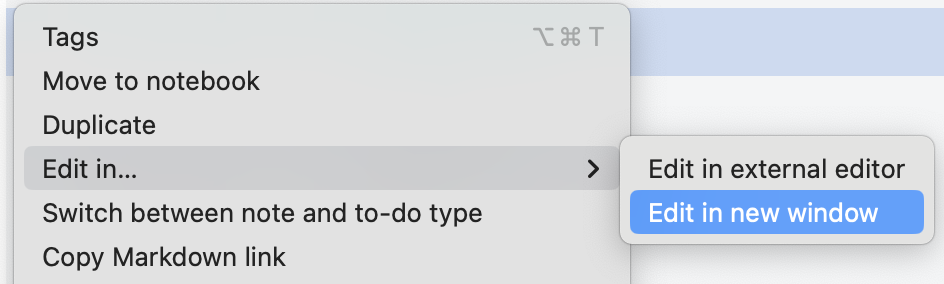
We're excited to introduce Multi-Window Support, a highly requested feature that makes managing multiple notes easier than ever. With this update, you can open notes in different windows and each window operates independently, allowing you to compare notes, reference content, and organise projects with greater flexibility.
To use this feature, right-click on a note, select Open in... and select Edit in new window
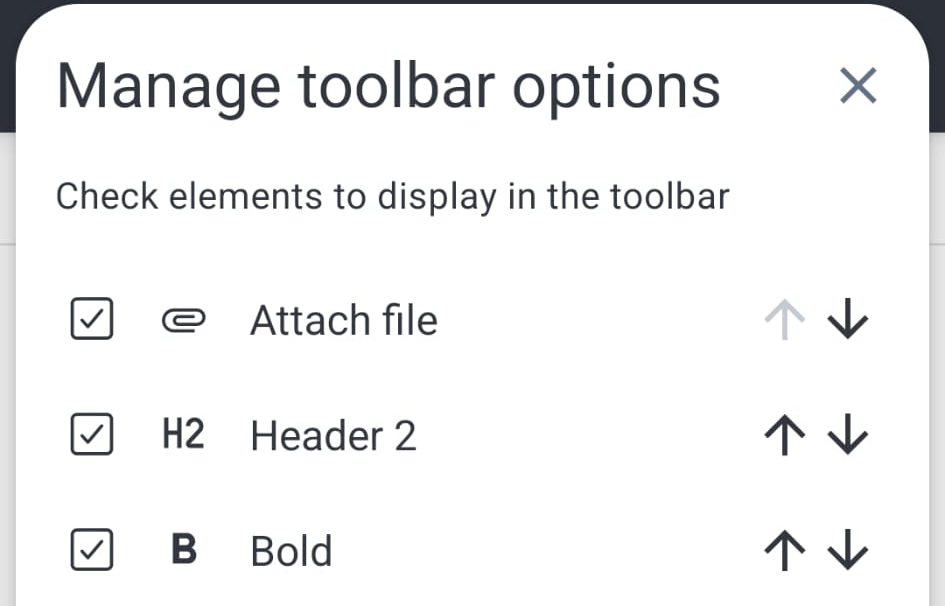
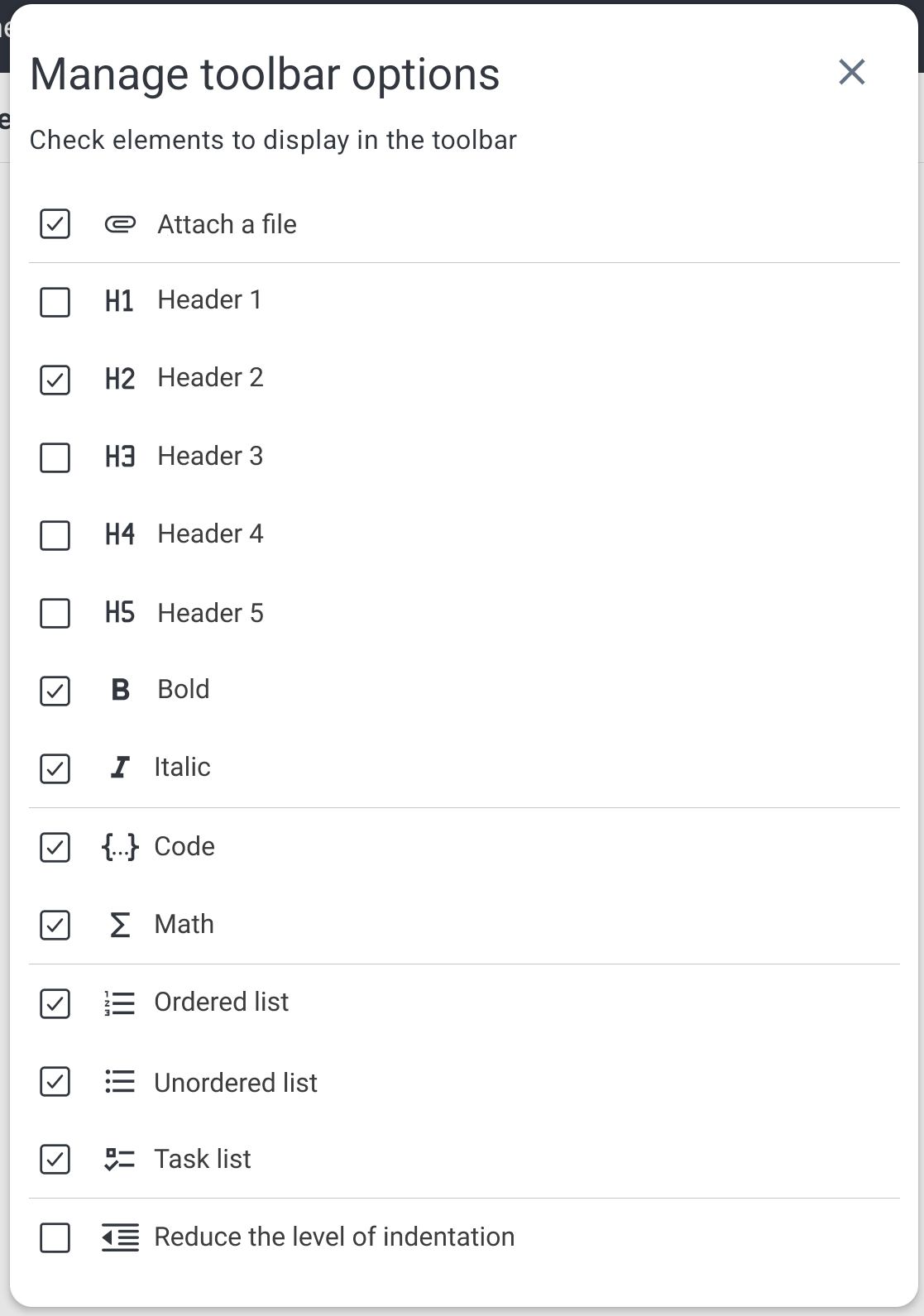
The new customisable toolbar on mobile is now draggable, making it easier to access the buttons you need. You can also choose which buttons to display by tapping the Cog button, allowing for a more personalised and efficient note-editing experience!
In order to implement the WCAG 2.0 guidelines, accessibility has seen a substantial upgrade thanks to the efforts of @personalizedrefrigerator. The desktop and mobile apps now offer better keyboard navigation, including improved functionality in dropdown menus and settings. Focus indicators have been made more visible, while ARIA labels have been added to boost compatibility with screen readers. Specific areas like note attachments, sidebars, and dialogs have also been optimised to ensure accessibility for all users.
Joplin's drawing and editing features have been fine-tuned for a smoother experience. Freehand Drawing on mobile and desktop has been updated to version 2.14.0, addressing several usability issues and bugs. Additionally, the Freehand Drawing plugin is now part of the desktop app by default. These changes enhance the reliability and integration of the drawing tool.
For GSoC 2024, @wh201906 worked on optimising the encryption and decryption processes, boosting speed for mobile devices in particular (but desktop too). Additionally, the encryption security was improved by transitioning to a more robust 256-bit key.
As of now this feature is optional and can be enabled by going to the Configuration Screen, then Synchronisation => Advanced options => Use beta encryption.
Developers will appreciate the updates to Joplin's plugin ecosystem. A new API has been introduced to create toast notifications, alongside updates to CodeMirror packages. A new renderMarkup command has been introduced to allow you to render Markdown content to HTML using the Joplin built-in API.
Full changelogs
This is just an overview of the main features. The full changelogs are available there:
Joplin is partnering with a French government institution to bring you innovative new features! We will work on accessibility, voice typing, HTR and add Rocketbook integration. Today we'll present the planned HTR integration:
Currently, Joplin’s OCR (Optical Character Recognition) feature is designed to recognise printed text, which works great for scanning documents with standard fonts. However, we’re looking to expand this functionality to support handwritten text recognition (HTR), which would be beneficial to handle scanned, handwritten documents, as well as for the upcoming Rocketbook integration.
Handwritten text recognition is complex task, requiring significant processing power and large machine learning models. Because of this, we plan to implement HTR via a server, possibly integrated with Joplin Cloud or Joplin Server. The beauty of this approach is that handwritten text recognition is a rapidly evolving field, so we can continuously improve the server-side model. This means that every Joplin app can benefit from these updates without needing to redeploy or update the app itself.
For the Rocketbook integration, this integration will make a significant difference. Right now, your handwritten documents would be scanned as images, but with HTR, Joplin will be able to recognise the actual text you’ve written. Not only will your handwritten notes become searchable, but you’ll also be able to copy and paste the text into other documents.